
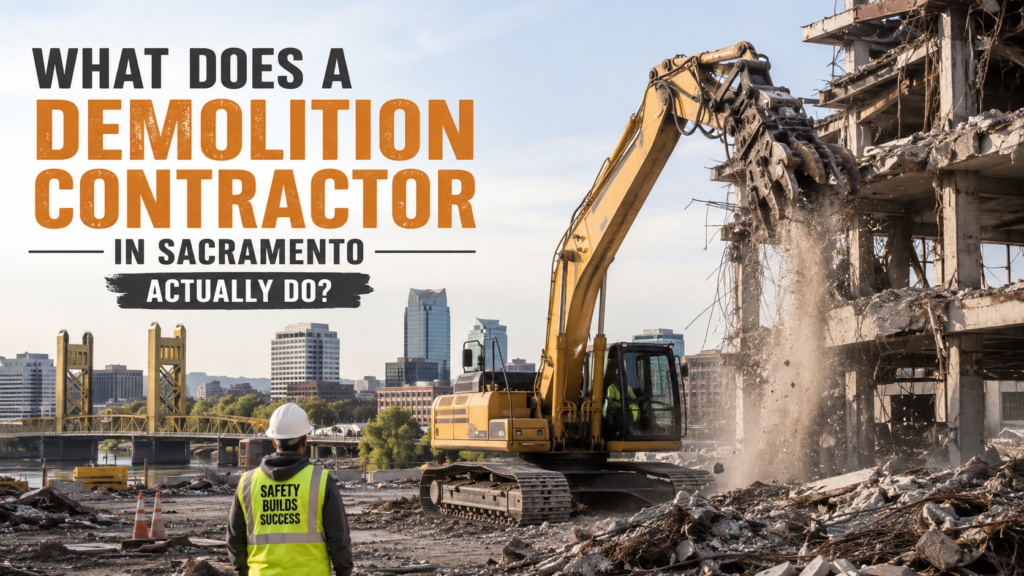
Demolition is far more complex than the dramatic images of wrecking balls and collapsing walls might suggest. In Sacramento, demolition contractors operate at the intersection of engineering, environmental science, safety management, and logistics. Understanding exactly what a Demolition Contractor Sacramento does and the expertise required to do it well can help property owners, developers, and communities better appreciate this essential sector of the construction industry.
What Is a Demolition Contractor?
A demolition contractor is a licensed professional or company specializing in the controlled dismantling, tearing down, or selective removal of structures and structural components. In California, contractors performing demolition work exceeding $1,000 in value must hold appropriate state contractor licenses, and those handling asbestos or hazardous materials require additional certifications. Sacramento demolition contractors serve residential homeowners, commercial developers, municipalities, and industrial clients alike.
The work is far broader than simply bringing a building down. It spans hazardous material identification and abatement, structural assessment, permit acquisition, debris removal and recycling, site cleanup, and land preparation for whatever comes next whether that is new construction, landscaping, or environmental restoration.
Types of Demolition Services in Sacramento
Sacramento contractors typically offer several distinct categories of demolition service. Complete structural demolition involves the total removal of an entire building, including the foundation. This is the most comprehensive scope and applies to projects such as removing deteriorated homes, clearing sites for commercial development, or eliminating unsafe structures condemned by the city.
Selective or interior demolition is far more common than total teardowns. In this approach, contractors remove specific portions of a building walls, ceilings, flooring, cabinetry, fixtures while preserving the structural shell and surrounding elements. Interior demolition is standard practice before remodeling projects, tenant improvements, and building renovations throughout Sacramento.
Deconstruction is an environmentally mindful alternative to conventional demolition. Rather than bringing equipment in to crush and haul everything away, deconstruction crews carefully dismantle structures by hand, salvaging usable lumber, metals, fixtures, windows, and other materials for resale or donation. This reduces landfill contributions and can offset some of the project cost through material value recovery.
Pool demolition is a specialized service in high demand across Sacramento neighborhoods where older gunite or concrete pools are being removed. Contractors either perform a full removal digging out the entire pool structure or a partial fill, in which the pool walls are broken inward and the void is filled with compacted soil and gravel.
What Happens Before Demolition Begins?
Responsible demolition in Sacramento begins well before any equipment arrives on site. The process typically starts with a thorough pre-demolition inspection. Contractors assess the structure for hazardous materials including asbestos, lead paint, mold, and other substances regulated under federal EPA and OSHA standards. Older Sacramento homes and commercial buildings constructed before the 1980s are particularly likely to contain asbestos in insulation, floor tiles, roofing materials, and pipe wrapping.
When hazardous materials are found, they must be fully abated by certified professionals before any demolition activity can proceed. Abatement involves careful containment, removal, and disposal following strict regulatory protocols. Only after the site is cleared of hazards may the contractor move forward with structural work.
Permit acquisition is another essential pre-demolition step. Sacramento County and the city both require permits for demolition of structures on public record. Permits ensure the project meets local zoning, environmental, and safety requirements. Experienced contractors manage this process on behalf of property owners, coordinating with the appropriate agencies.
Utility disconnection is also required prior to demolition. All gas, electricity, water, and sewer connections must be properly shut off, capped, or rerouted to prevent accidents during the teardown. Contractors coordinate with utility providers to confirm safe disconnection before work begins.
The Demolition Process Itself
The actual demolition phase varies depending on the project scope and site conditions. For smaller residential structures, excavators equipped with hydraulic attachments are frequently used to break apart and remove material efficiently. Larger structures may require more complex sequencing to protect adjacent buildings, utilities, or public areas.
In dense Sacramento neighborhoods, demolition contractors must carefully plan equipment placement, debris containment, and dust and noise management to minimize impact on neighboring properties. Dust suppression through water misting is standard practice, as is the installation of temporary fencing and barriers to protect the work zone.
The Sacramento area encompasses multiple counties Sacramento, El Dorado, and Placer among them each with potentially different requirements around debris management. For example, El Dorado County has specific Construction and Demolition Debris Recycling Ordinance requirements aligned with CalGreen standards aimed at reducing landfill waste. Sacramento contractors familiar with these regional variations can navigate them efficiently.
Debris Removal and Site Cleanup
After structural dismantling, demolition contractors oversee the removal of all resulting debris. Concrete, steel, wood, and other materials are typically sorted on site for recycling where possible. Concrete and masonry can often be crushed and repurposed as fill or base material. Metals are recycled through scrap facilities. Wood may be chipped, hauled, or, in some cases, salvaged.
Once debris is cleared, contractors typically grade and clean the site to prepare it for whatever comes next. In cases where the property owner intends to rebuild, contractors may also perform initial earthwork and land preparation to support the new construction timeline.
Why Professional Demolition Matters
Attempting demolition without professional expertise introduces serious risks to personal safety, adjacent structures, utilities, and the environment. Professional demolition contractors in Sacramento bring licensed operators, certified equipment, comprehensive insurance, and a systematic process that accounts for every stage from pre-inspection to final cleanup. They also carry the industry knowledge to identify complications before they become costly problems.
The Sacramento region is an active construction and development market, and demolition plays a foundational role in that cycle. Whether it is clearing aging residential structures, making way for commercial development, or interior renovation of historic buildings, skilled demolition contractors transform existing built environments into the blank slates that make progress possible.
Frequently Asked Questions About Sacramento Demolition Contractors
Do I need a permit to demolish a structure in Sacramento? Yes. Sacramento County and the city require permits for demolishing any structure that appears on public records. Contractors manage this process, but it is an important step that must not be skipped.
How long does a residential demolition take in Sacramento? A typical single-family home demolition may take anywhere from one day to one week, depending on the type of demolition selected, the size of the structure, and site conditions. Interior demolition projects often move faster.
Can demolition contractors recycle the debris? Most professional Sacramento contractors offer debris recycling and salvage services. Concrete, metal, and clean wood can often be recycled, reducing landfill costs and environmental impact.
What if my building has asbestos? Hazardous material abatement must happen before demolition. Certified abatement crews remove and dispose of asbestos, lead, and other regulated substances following EPA and OSHA guidelines before any structural work proceeds.